


- About Us

- Products
- Services
- Investor Relations
- News & CSR
- Blog
- Sustainability
- Distributors
- Contact Us
- Notice / Finance Policy
- Privacy Notice
- e-Billing System
- Intranet
Human Rights Management

Targets
- No complaints related to human rights violations or discrimination were reported.
- 100% of employees acknowledged and complied with human rights principles.
- No complaints related to labor practices and human rights were recorded.
Performance Results
- No complaints related to human rights violations or discrimination were reported.
- 100% of employees acknowledged and complied with human rights principles.
- No complaints related to labor practices and human rights were recorded.
Human Rights Management Approach
The Company places strong emphasis on respecting human rights and conducting business responsibly, ensuring equal treatment of all stakeholders regardless of gender, religion, race, nationality, or vulnerable groups such as persons with disabilities and children.
A human rights policy aligned with international principles has been established and communicated across all levels of the organization. The Company also implements Human Rights Due Diligence (HRDD) processes to assess potential risks and impacts throughout its operations and value chain, reflecting its commitment to transparency, accountability, and long-term sustainability.
Human Rights Management Process
- Define the scope of human rights assessment.
- Identify potential human rights risks, such as child labor, forced labor, discrimination, and violations of freedom of expression.
- Assess potential impacts and organizational risks, including reputational damage, legal consequences, and loss of stakeholder trust.
- Evaluate risks based on severity and likelihood of occurrence.
- Prioritize risks according to their level, such as high, medium, or low.
- Develop measures to prevent and mitigate potential risks, such as employee training, supplier audits, and the establishment of transparent practices.
- Review policies and implement specific initiatives to prevent human rights violations.
- Establish mechanisms for ongoing monitoring and tracking of human rights performance.
- Regularly assess impacts and review risks to ensure alignment with established policies and guidelines.
- Disclose information on human rights risk assessments and mitigation actions to stakeholders, demonstrating transparency and accountability.
Activities
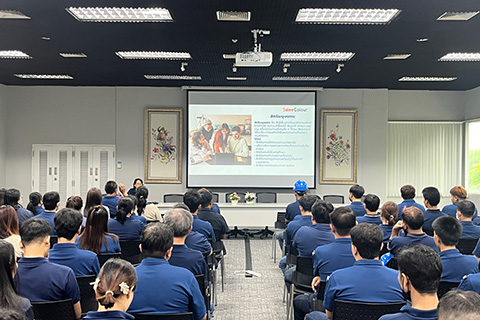
Executives and employees attended human rights training and formally acknowledged compliance on May 26, 2025.
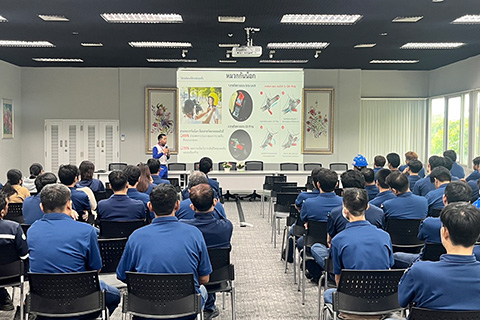
The Company conducted safe driving training to promote employees’ right to a safe working environment, reduce accident risks, and foster a safety culture, in alignment with human rights principles on health and safety.
Human Rights Issue
Employees
- Equal treatment in all aspects.
- Workplace safety and working conditions.
- Freedom of association and collective bargaining rights in accordance with the law.
- Employee rights and welfare.
- Whistleblower confidentiality.
Suppliers/Contractors
- Equal treatment in the workplace.
- Workplace safety and working conditions.
- Freedom of association, expression, and collective bargaining in accordance with the law .
- Supplier code of conduct.
Community
- Supply chain management to minimize impacts on the environment, society, and economy.
- Rights to expression, grievance mechanisms, and freedom of assembly.
- Community health and safety.
- Communication, engagement, and assessment of community needs and expectations.
- Standard of living and quality of life.
Customers/Consumers
- Equal and fair access to products and services.
- Data privacy and protection.
- Product quality and safety standards.
- Responsible sourcing to prevent the use of child labor or forced labor in the supply chain.
Human Rights Risk Assessment Criteria
The Company prioritizes human rights risk management based on the likelihood of occurrence and the severity of potential impacts. The assessment covers four key human rights dimensions as follows:
| Likelihood | Low (1) | Medium (2) | High (3) | Very High(4) |
|---|---|---|---|---|
| Likelihood of occurrence | Rare or minimal occurrence (not more than once per year) |
Moderate occurrence (2–3 times per year) |
Frequent occurrence (6–12 times per year) |
Very frequent occurrence (more than once per month) |
| Nature of impact | Minor impact on health and safety (manageable through basic first aid) | Impact on stakeholders’ health and safety, resulting in injuries or requiring medical treatment | Severe impact on stakeholders’ health and safety, resulting in serious injury, work absence of more than 3 days, or permanent disability | Impact on stakeholders’ health and safety, resulting in fatality |
| Scope of impact | Impact on a specific group of stakeholders | Impact limited to a single stakeholder group | Impact on more than one stakeholder group | Impact on a wide range of stakeholders or the public |
| Remediability | Easily remediable v |
Remediable within more than 1 month but less than 1 year | Remediable over a period exceeding 1 year | Not remediable or requires more than 5 years for remediation |
Human Rights Risk Assessment Results (Previous Year)
Based on the human rights risk assessment conducted across the Company’s operational areas and areas under its control, the overall risk level was identified as ranging from low to high. The Company has established mitigation and remediation measures to address key human rights risks relevant to its business operations as follows:
100%
of operational sites were assessed for human rights risks.
100%
of operational sites identified with human rights risks (4 sites).
100%
of identified sites have implemented mitigation and remediation
Whistleblowing
The Company places strong importance on protecting employee rights and safety by establishing a structured grievance and whistleblowing mechanism covering cases such as discrimination, harassment, and misconduct of all forms.
Multiple reporting channels are available, including line managers, the Human Resources department, and electronic platforms. All complaints are handled with strict confidentiality, with options for anonymous reporting and measures in place to protect whistleblowers from retaliation.
Upon receiving a complaint, the Company appoints a fair and transparent investigation team, allowing all parties to present information. Disciplinary and legal actions are taken where appropriate.
Clear procedures for grievance handling and remediation are also established, covering investigation, compensation, rehabilitation, and corrective actions to ensure fairness and accountability.
In 2025, no significant complaints or disputes related to human rights violations were identified, reflecting the effectiveness of the Company’s measures and its commitment to responsible and sustainable business practices.
Learn more: นโยบายสิทธิมนุษยชน
